Teaching
One of our Centre’s key missions is to give students the tools they need to reflect critically on existing animal welfare laws and to explore what animal rights laws might look like.
Animal Rights Law Lectures
These Animal Rights Law Lectures were given to final-year Law students at the University of Cambridge in Michaelmas and Lent Terms 2021-22. There were 14 lectures, each lasting just under one hour, and some are made freely available by kind permission of the University of Cambridge.
About the Lectures
The Lecture follow the broad structure of the Animal Rights Law half paper taught by Dr Butler and Dr Fasel to third-year Law students at Cambridge.
To provide a grounding, the Lectures start with a short exploration of the nature of animals (“non-human animals”) as sentient creatures. After this, the Lectures look at the existing legal regimes for animals (anti-cruelty and animal welfare laws), focussing mostly on the UK and EU but also considering some other countries.
That leads to a consideration of the divergent approaches of welfarism and abolitionism, paving the way for a discussion of the philosophy and the legal theory of animal rights, which provides us with the tools to understand the basis for granting rights to animals, and related issues such as whether animals need to become legal persons or whether they can remain property.
Finally, the Lectures explore what is happening at the moment in parliaments and law courts around the world, asking which litigation is pursued where to establish animals as rights holders and which bills have been proposed (and adopted) to secure a better legal status for animals.
-
Lecture 1: Introduction to animal rights law, and the nature of animal sentience with Sean Butler
Lecture 2: History of the legal status of animals with Sean Butler
Lecture 3: Animal welfare law in the UK and EU with Sean Butler
Lecture 4: Comparative animal welfare law with Raffael Fasel
Lecture 5: The great debate: welfarism v abolitionism with Raffael Fasel
Lecture 6: Animal rights: philosophical foundations with Raffael Fasel
Lecture 7: Animal rights: legal theory, pt I with Raffael Fasel
Lecture 8: Animal rights: legal theory, pt II with Raffael Fasel
Lecture 9: Intersection between animal rights and human rights with Raffael Fasel
Lecture 12: Animal rights cases, pt I (habeas corpus) with Sean Butler
Lecture 13: Animal rights cases, pt II (beyond habeas corpus) with Raffael Fasel
Lecture 14: Model animal rights laws, pt I with Sean Butler
Lecture 15: Model animal rights laws, pt II with Sean Butler
Lecture 16: Implications of animal rights law with Sean Butler
History of the Animal Rights Law Lectures
In 2017, our Co-Directors started offering a free and extracurricular course on Animal Rights Law. This course was organised in the same manner as a Cambridge half-paper, which means that it was taught in sixteen 1-hour sessions. The course proceeded in three parts, covering, first, the history and the status quo of animal welfare laws, second, the philosophy and legal theory of animal rights, and third, the practical implications of animal rights, including model animal rights laws and animal rights cases.
In 2021, the Animal Rights Law course became a formal part of the Cambridge undergraduate Law degree. As such, it is now only open to Cambridge students.
The previous course syllabus and short reading lists can be found here.

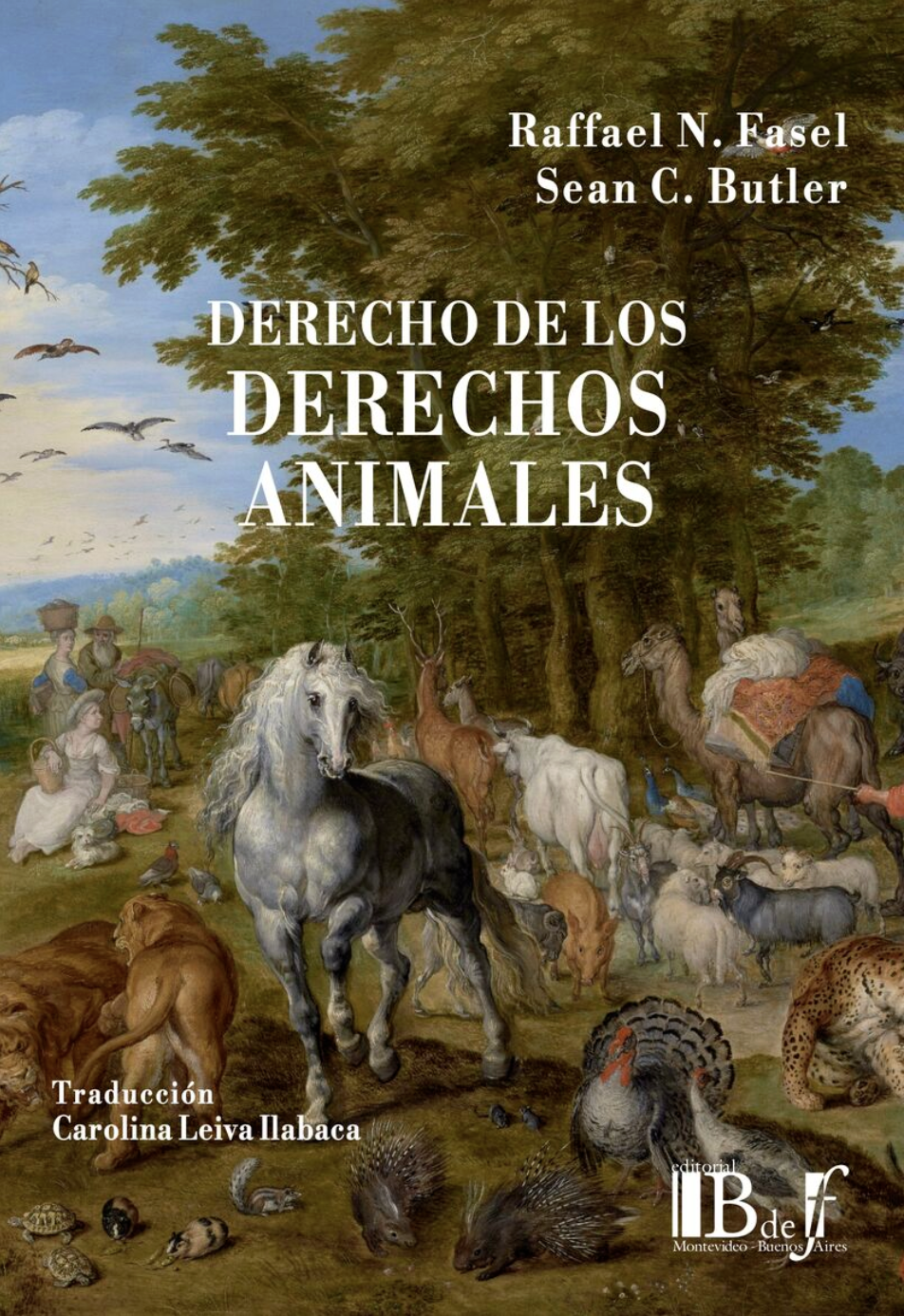
Animal Rights Law textbook
The Centre’s co-founders have released the very first Animal Rights Law textbook for students, lecturers, and curious minds alike.
Description
Do animals have legal rights? This pioneering book tells readers everything they need to know about animal rights law.
Using straightforward examples from over 30 legal systems from both the civil and common law traditions, and based on popular courses run by the authors at the Cambridge Centre for Animal Rights, the book takes the reader from the earliest anti-cruelty laws to modern animal welfare laws, to recent attempts to grant basic rights and personhood to animals. To help readers understand this legal evolution, it explains the ethics, legal theory, and social issues behind animal rights and connected topics such as property, subjecthood, dignity, and human rights.
The book's companion website (bloomsbury.pub/animal-rights-law) provides access to briefs on the latest developments in this fast-changing area, and gives readers the tools to investigate their own legal systems with a list of key references to the latest cases, legislation, and jurisdiction-specific bibliographic references.
Rich in exercises and study aids, this easy-to-use introduction is a prime resource for students from all disciplines and for anyone else who wants to understand how animals are protected by the law.
Learn more and purchase your own copy here.
-
Introduction
1. The Current Legal Status of Animals
I. Introduction
II. The Property Status of Animals
III. Legislation Protecting Animals
IV. Constitutional Law
V. International Law
VI. Animal Protection Laws in Practice
VII. Conclusion
2. Welfarism vs Abolitionism, a Dichotomy?
I. Introduction
II. Classic Welfarism
III. Abolitionism
IV. New Welfarism
V. Beyond the Dichotomy
VI. Conclusion
3. Philosophical Foundations of Animal Rights
I. Introduction
II. Peter Singer's Utilitarianism
III. Tom Regan's Deontological Approach
IV. Martha Nussbaum's Capabilities Approach
V. Sue Donaldson and Will Kymlicka's Political Theory
VI. Critical Approaches to Animal Rights
VII. Conclusion
4. The Legal Theory of Animal Rights
I. Introduction
II. Are Animals Fit to have Legal Rights?
III. Do Animals Already have Legal Rights?
IV. Would Animals Need to Become Legal Persons?
V. Conclusion
5. Animal Rights and Human Rights
I. Introduction
II. Should Only Humans have Human Rights?
III. Should Animals have Similar Rights to Humans?
IV. How Could Human and Animal Rights be Reconciled Legally?
V. Conclusion
6. Animal Rights in Litigation
I. Introduction
II. Animals and the Issue of Legal Standing to Bring an Action
III. Animals as Subjects of Habeas Corpus
IV. Fundamental Rights and Personhood Litigation Beyond Habeas Corpus
V. Conclusion
7. Animal Rights in Legislation
I. Introduction
II. Domestic Proposals for Animal Rights Laws
III. International Proposals for Animal Rights Laws
IV. Drafting Animal Rights Laws
V. Conclusion
8. Animal Rights as a Social Justice Movement
I. Introduction
II. The Animal Rights Movement as Abolitionist
III. Animal Rights and Connections with Other Rights Movements
IV. Learning Lessons
V. Conclusion
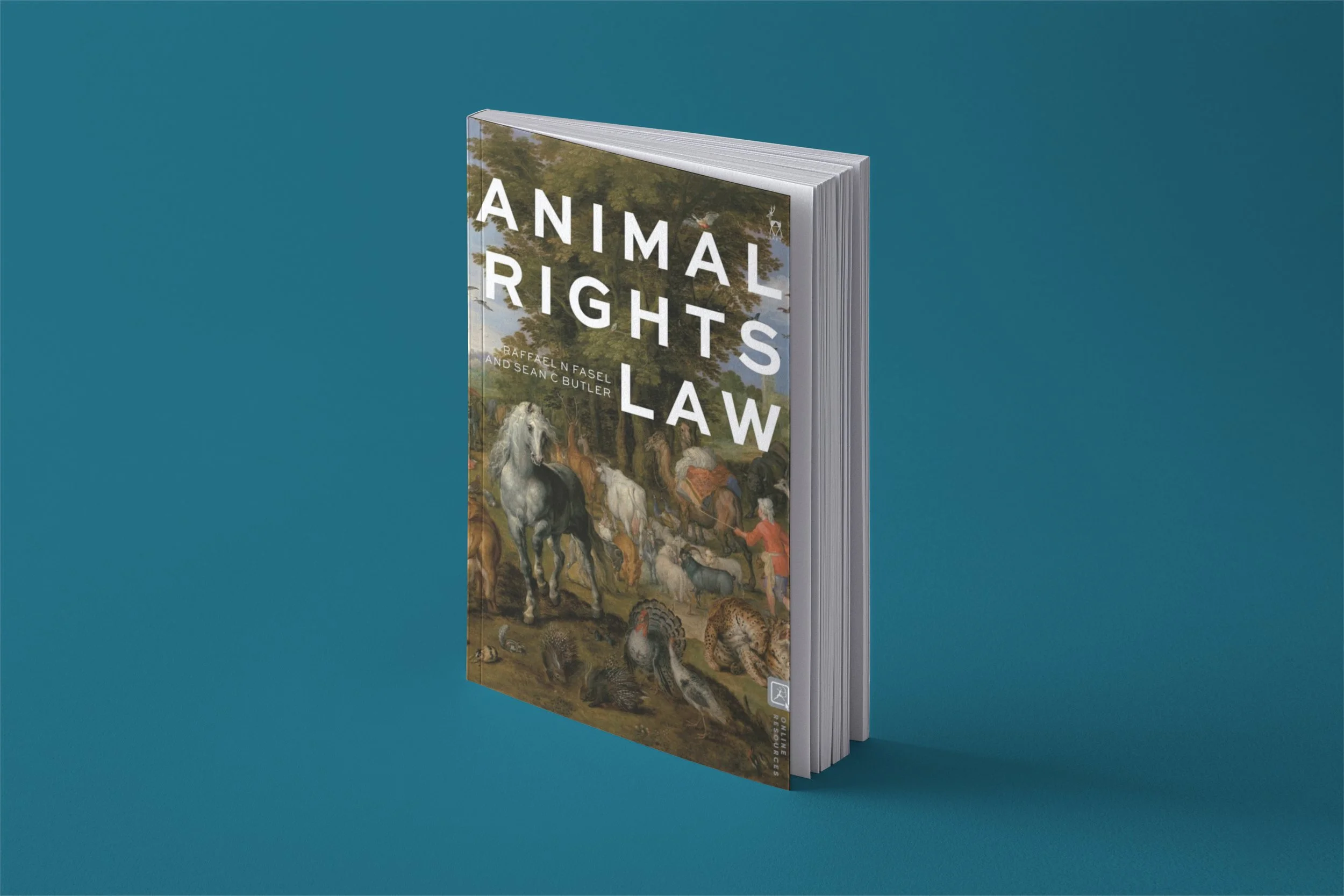
Animal Rights Law has been translated into Spanish by our Centre’s Carolina Leiva Ilabaca (Assistant Professor at the University Autonomous of Barcelona). Purchase the Spanish translation of Animal Rights Law, Derecho de los Derechos Animales, here.
Derecho de los Derechos Animales